SWAT-MODFLOW modeling to support resilient development and return on investment analyses in the Cubango-Okavango River Basin (CORB)
Role:Co-PI
Total Budget:$30,000
Period:April 2020 to Present
Funded by:The Nature Conservancy (TNC), United States
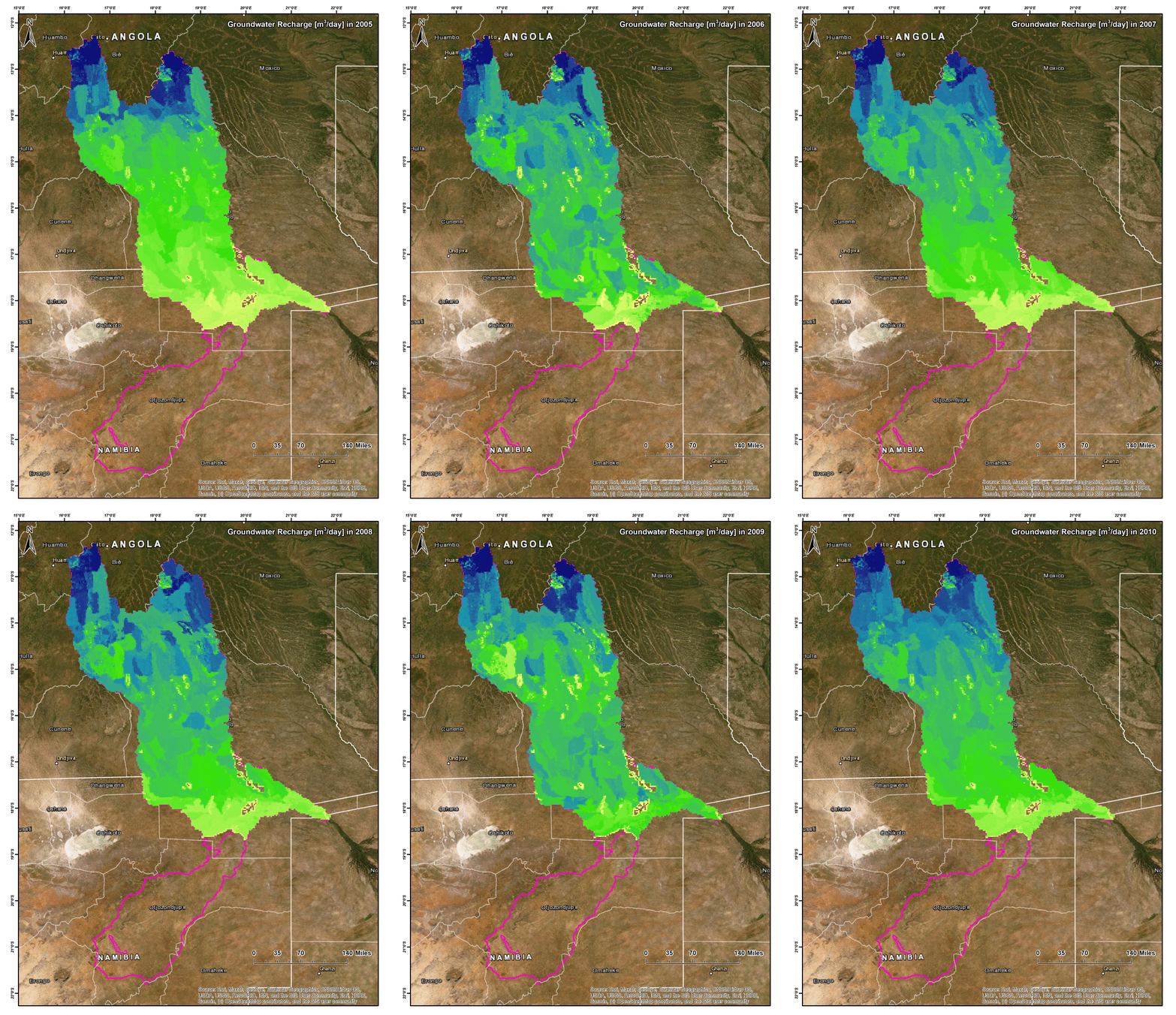
Annual Simulated Groundwater Recharge
Project Description
To support sustainable development planning in Angola, this project developed an integrated SWAT–MODFLOW model for the Cubango–Okavango River Basin to evaluate agricultural intensification while sustaining downstream flows to the Okavango Delta, a critical ecological and economic system.
The model simulates key surface–subsurface hydrologic processes, including runoff, evapotranspiration, groundwater–surface water interactions, and basin-scale water balance. Due to limited in situ data, gridded (GPCC) and satellite-based (CHIRPS) precipitation datasets were used to drive the model, and baseflow separation techniques supported groundwater parameter calibration in the absence of monitoring wells.
Model performance showed satisfactory agreement with observed streamflow at Dirico and Mohembo (monthly NSE up to 0.76), capturing dominant baseflow contributions and spatial–temporal variability in groundwater dynamics. Results provide a scientific basis for evaluating land management impacts, protecting freshwater ecosystems, and informing long-term water resources planning in the basin.
Highlights
Integrated Modeling Framework: Developed a basin-scale SWAT–MODFLOW model to quantify coupled surface–groundwater processes in a data-scarce transboundary watershed.
Innovative Use of Limited Data: Combined satellite and gridded precipitation products with historical streamflow and baseflow analysis to overcome sparse hydrologic observations.
Decision Support for Conservation and Development: Provided actionable insights to balance agricultural development, ecosystem protection, and downstream flow sustainability for the Okavango Delta.